
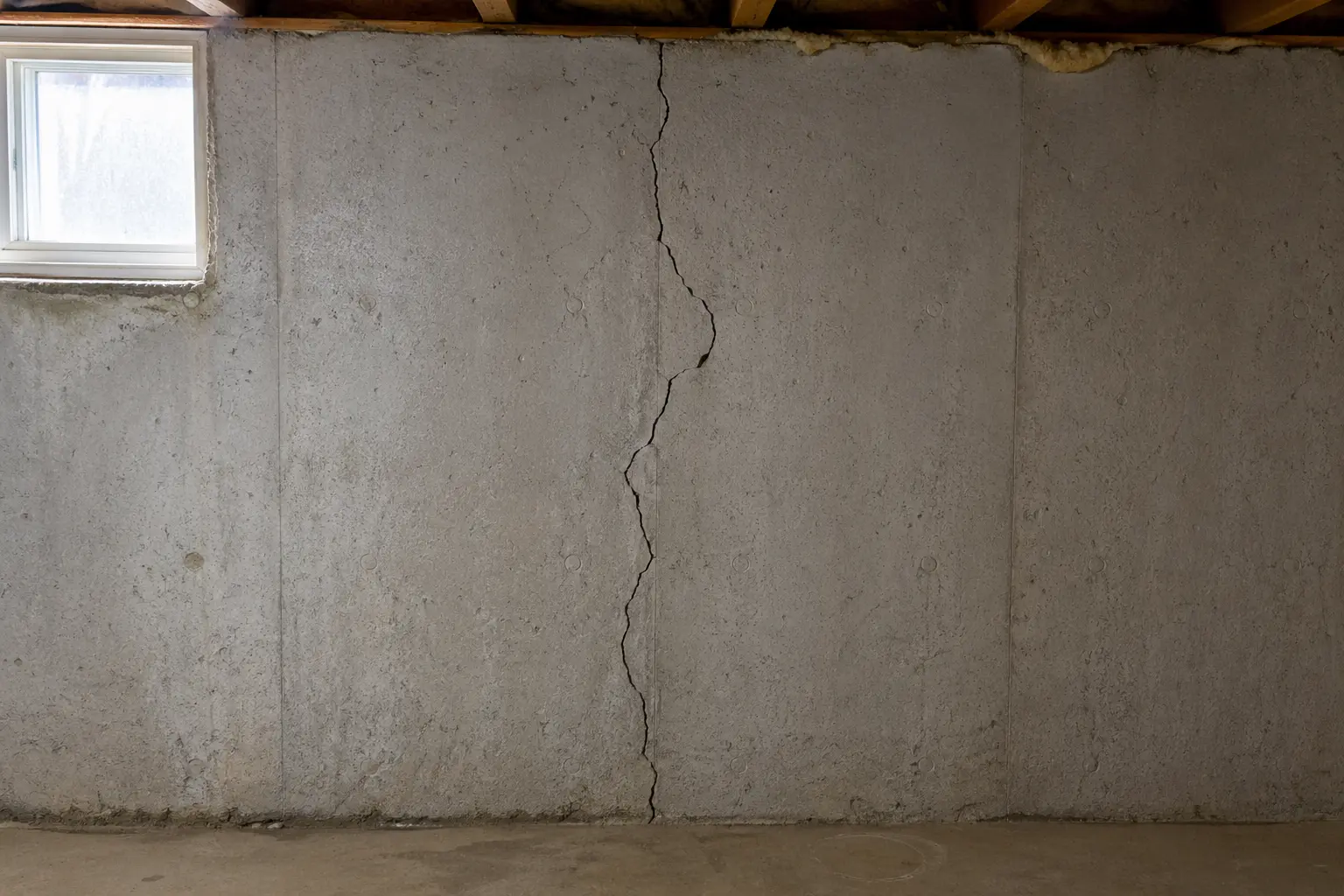
If you’ve spotted a crack in your basement wall or floor, your first instinct might be to Google whether it’s serious. The honest answer is: it depends on the crack. Some cracks are cosmetic. Others are a sign of active water intrusion or structural movement that needs attention right away. Knowing the difference before you call anyone puts you in a much better position.
This post covers the most common types of foundation cracks seen in Durham Region homes, what each one typically means, and what kind of repair is appropriate. If you’re in Oshawa, Whitby, Ajax, Pickering, Courtice, or Bowmanville, the soil conditions and freeze-thaw cycles here create specific patterns worth understanding.
Why Durham Region Homes Are Prone to Foundation Cracks
Durham Region sits on a mix of clay-heavy soils that expand when wet and contract when dry. Combined with Ontario’s freeze-thaw cycle — which can put significant lateral pressure on foundation walls from November through March — the foundations of local homes are under regular stress. This doesn’t mean cracks are inevitable, but it does mean they’re common, and understanding the cause matters as much as patching the crack itself.
Most homes in Oshawa and the surrounding area were built with either poured concrete or concrete block foundations. Each responds differently to movement, and each produces different crack patterns when something is off.
Vertical Cracks
Vertical cracks run straight up and down the wall, or close to it. In poured concrete foundations, these are among the most common cracks and are typically caused by the concrete curing and shrinking after it was poured. A hairline vertical crack with no water staining and no movement is usually a cosmetic issue.
That said, vertical cracks become a real concern when they allow water to pass through. Even a thin crack can become a consistent water entry point during heavy rain or snowmelt, especially in areas like Courtice and Bowmanville where lot grading can direct water toward the foundation. A crack that’s actively wet or has white mineral deposits (efflorescence) running down the wall is no longer just cosmetic.
Repair for vertical cracks typically involves polyurethane or epoxy injection from the interior, or an exterior patch with membrane if the wall is being excavated for other reasons. Polyurethane is the standard for active leaks because it expands to fill the crack and remains flexible. Epoxy is used when structural bonding is the priority.
Horizontal Cracks
Horizontal cracks are the ones worth taking seriously right away. A crack running across the wall, parallel to the ground, is a sign that the foundation wall is under lateral pressure from the soil outside. In block foundations especially, this kind of crack can indicate that the wall is beginning to bow inward.
In Durham Region, horizontal cracks often develop in homes where the soil outside has been retaining water due to poor drainage, failing weeping tile, or grading that sends water toward the house rather than away from it. The pressure doesn’t happen overnight — it builds over years, which is why these cracks tend to appear in older homes but can worsen quickly once they start.
A horizontal crack is not a repair-it-yourself situation. If the wall is bowing even slightly, the structural integrity of the foundation is compromised. This is when you need a professional assessment before doing anything else. In some cases, wall anchors or carbon fibre strapping are required in addition to waterproofing. In severe cases, the wall may need to be rebuilt.
If you’re in a home in north Oshawa or Whitby and you’re seeing a horizontal crack that seems to have grown, do not leave it until spring.
Diagonal and Stair-Step Cracks
Diagonal cracks run at an angle, often starting from corners around windows or at the top of the wall. Stair-step cracks follow the mortar joints in block foundations, zigzagging down the wall in a staircase pattern. Both are typically caused by differential settlement — one part of the foundation settling more than another.
Some diagonal cracking is normal in older homes and represents the building finding its settled position over decades. A crack that has been stable for years and shows no sign of water or widening is generally lower priority. A crack that has been growing, has gaps of 6mm or more, or is paired with doors or windows that have become difficult to open and close is worth getting eyes on.
Stair-step cracks in block foundations are also a common water entry point because the mortar joints are the weakest part of the wall. Even when the crack itself isn’t alarming structurally, it often needs to be addressed from a waterproofing standpoint.
Floor Cracks
Cracks in the basement floor are very common and in most cases are not structural. Concrete floors are poured separately from the foundation walls and are not load-bearing in the same way, so minor cracking as the slab cures or settles is expected.
The concern with floor cracks is water. A crack in the floor can allow groundwater to seep up, especially in homes without a proper interior drainage system or sump pump. This is sometimes called hydrostatic pressure — groundwater builds up below the slab and finds the path of least resistance upward.
If you’re seeing water coming up through the floor rather than in through the walls, the solution is typically an interior drainage system that intercepts the water at the perimeter and directs it to a sump pump, rather than trying to seal the crack itself.
Cracks at the Wall-Floor Joint
The joint where the basement wall meets the floor is a common spot for water entry even without a visible crack. In poured concrete foundations, the wall and floor are two separate pours and the joint between them is a natural weak point. Over time, settlement, hydrostatic pressure, or simply age can cause this joint to open up.
Water coming in at the wall-floor joint is almost always addressed with interior drainage — a channel cut into the concrete perimeter that collects water and routes it to a sump. It’s one of the most reliable, long-term solutions for this type of water entry and is commonly used in basement finishing projects across Oshawa, Ajax, and Pickering where homes are being converted into legal apartments or family living space.
When to Call for Foundation Crack Repair
Not every crack needs professional intervention immediately. A hairline vertical crack with no moisture, no growth, and no staining can be monitored with a simple pencil mark and date. If it doesn’t move over a season, it’s likely dormant.
You should call a professional when:
- the crack is horizontal or shows signs of bowing
- the crack has water actively coming through it or has efflorescence running from it
- the crack is wider than a few millimetres or has grown since you first noticed it
- you’re seeing multiple cracks in different locations
- doors or windows in the home are sticking or have shifted
- you’re planning to finish or renovate the basement and want to address any issues before drywall goes up
That last point matters more than most homeowners realize. Waterproofing and crack repair done before a basement renovation saves significant time, money, and frustration. You don’t want to pull finished walls apart two years after a renovation to fix a leak that was visible before you started.
What Foundation Crack Repair Looks Like in Practice
At Wilworks, the process starts with a full inspection. We look at the crack itself, the surrounding wall, any moisture patterns, and the exterior conditions where possible. From there, the repair method depends on the crack type, whether it’s actively leaking, and what’s happening on the outside of the foundation.
For isolated cracks in poured concrete, polyurethane injection is typically the right call. It’s a same-day repair for most situations and comes with a lifetime warranty on the repaired area. For more complex situations involving block foundations, multiple cracks, or drainage problems contributing to the issue, we’ll often recommend addressing the underlying water management problem rather than patching symptoms.
We cover foundation crack repair across Durham Region, including Oshawa, Whitby, Ajax, Pickering, Courtice, and Bowmanville. If you’re unsure what you’re looking at, a free assessment is the right first step. We’ll tell you honestly what the crack means and what, if anything, needs to be done.
Book a free assessment or call us directly at 289-939-1389.
Related Reading
If you’re still figuring out whether your basement moisture problem is a crack issue or something broader, these posts may help: